
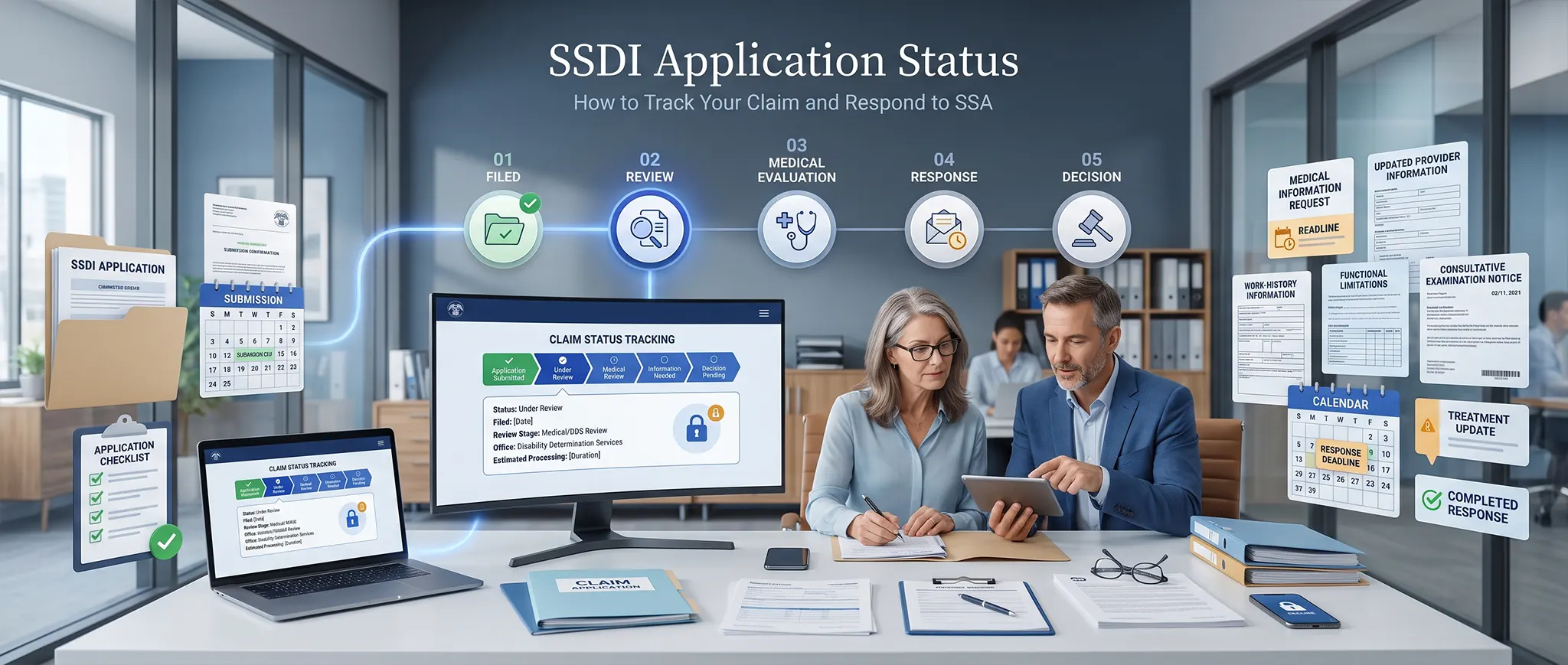
Applying for Social Security Disability Insurance can involve months of medical review, work-history verification, and communication between the Social Security Administration and state Disability Determination Services. During that time, it is natural to want to know where your claim stands and whether anything is required from you.
The most reliable way to check SSDI application status is through your personal my Social Security account. Tracking the claim is not just about watching for a decision. It can help you confirm that the application is moving through the process, identify the office handling the claim, and stay alert for requests for information that may require a prompt response.
This guide explains what claim tracking can tell you, how the disability review generally moves forward, what to do when SSA or Disability Determination Services contacts you, and when additional follow-up may be appropriate.
Why Tracking Your Disability Claim Matters
After you file, the claim moves through administrative and medical-review steps. Social Security handles nonmedical eligibility issues, while the medical portion of an initial claim is generally sent to a state Disability Determination Services agency, or DDS.
Monitoring the claim can help you notice when SSA needs information or when the case moves to another stage. A status update is not a prediction of approval or denial; it shows where the claim is in the process, not whether the evidence will satisfy Social Security’s disability rules.
How to Check Your Claim Online
If you want to check SSDI application status, sign in to or create a personal my Social Security account. Social Security uses this secure account to let applicants view the status of an application or appeal online.
Depending on the claim and its stage, the account may show information such as:
- The filing date
- The current location of the claim
- The servicing office
- A scheduled hearing date and time, when applicable
- Re-entry information for an incomplete online application
- Information or publications related to the current stage
The status tool may also show where you are in the process and when SSA expects to have a decision. That estimate is not guaranteed; timing can vary with evidence development, examinations, workload, and other case-specific factors.
What Your Social Security disability application status Can Tell You
An online status is useful, but it has limits. A claim may remain in the same visible stage while medical records are requested or evidence is reviewed.
The Social Security disability application status may indicate that the claim is under review, that information is needed, or that a decision has been made. A lack of day-to-day movement does not necessarily mean the case is inactive; disability claims often depend on information from medical providers and other outside sources.
What Happens After an SSDI Application Is Filed?
The disability review has both nonmedical and medical components. A Social Security field office reviews basic eligibility factors, including Social Security coverage and other relevant information. The medical portion is generally sent to DDS, which develops evidence and makes the initial medical determination.
DDS usually seeks records from the claimant’s own medical sources first. If the evidence is unavailable or insufficient, it may arrange a consultative examination. After DDS makes the initial determination, the case returns to Social Security for appropriate action. Understanding this flow makes the SSDI application status easier to interpret when the claim changes locations during review.
Respond Promptly When SSA or DDS Contacts You
While a claim is pending, monitor your mail, phone messages, and account notifications. DDS may request information or ask you to take action, usually by letter and sometimes by telephone.
Requests may involve:
- Updated medical-provider information
- Details about recent treatment
- Work-history forms
- Information about daily activities or functional limitations
- Permission or action needed to obtain evidence
- Attendance at a consultative examination
- Clarification of incomplete or inconsistent information
Respond within the timeframe stated in the request. If you cannot do so, contact the office listed on the notice. An incomplete response can leave DDS to make a determination using the evidence available.
Keep Your Contact and Medical Information Current
Keep SSA informed of meaningful changes to your address, phone number, work activity, or other requested information. Be ready to provide updated medical sources after significant new treatment, testing, surgery, or hospitalization.
Do not repeatedly submit the same material because the online status is unchanged. Focus on relevant updates and follow SSA or DDS instructions.
What If the Status Does Not Change for a While?
An unchanged online status does not necessarily indicate a problem. Medical-record collection, professional review, examinations, and administrative processing can take time. First, review your account for notices or requested actions. If you want to check SSDI application status another way, Social Security also provides automated phone assistance. You can call 1-800-772-1213 and say “application status” when prompted.
If you have received a letter from a specific office or DDS examiner, use the contact information on that correspondence for questions related to the request. Keep notes of significant calls, dates, and documents submitted so you have a clear record of your own follow-up.
Avoid These Common Mistakes While Waiting
- Ignoring mailed notices: A letter may contain a deadline or instruction that is not obvious from the status screen.
- Calling repeatedly without a specific reason: Frequent calls generally do not accelerate a medical determination. Follow up when you have a question, a deadline, or a relevant change.
- Assuming a delay means denial: Processing time varies, and delay alone does not indicate the outcome.
- Sending unrelated records: Focus on evidence and provider information that documents your condition and work-related limitations.
Where SSDI Eligibility Checker Fits
Claim tracking matters after filing, but some people are still deciding whether SSDI is appropriate to explore.
SSDI Eligibility Checker offers a simple, no-pressure starting point before a formal application by helping users think through work history, age, medical limitations, and current ability to work. It does not track an SSA claim, access government records, make a disability determination, or guarantee approval.
If you have already filed, use Social Security’s official tools. If you have not applied, an initial eligibility check can help organize the questions to address first.
What to Do When a Decision Appears
When the online account shows that a decision has been made, carefully review the official notice. It explains the decision and, when applicable, the next options. If the claim is denied and you disagree, pay close attention to the appeal instructions and deadline. Do not rely only on an online status message.
A Practical Claim-Tracking Checklist
While your application is pending:
- Keep access to your personal my Social Security account.
- Review mail and messages regularly.
- Keep your address and phone number current.
- Respond promptly to requests from SSA or DDS.
- Attend scheduled consultative examinations.
- Report relevant new treatment or providers when requested.
- Keep copies of important submissions and notices.
- Record dates of significant calls or follow-up.
- Read the official decision notice before taking the next step.
Good claim management is less about checking constantly than being accurate and responsive when information is requested.
Final Thoughts
Your claim status is an administrative snapshot, not a forecast of the final decision. Use official tracking tools, respond to legitimate requests promptly, and keep your contact, treatment information, and personal records organized.
If you need a status update, start with your personal my Social Security account or Social Security’s official phone service. Then focus on what you can control: providing complete information and responding when the agency asks for it.